
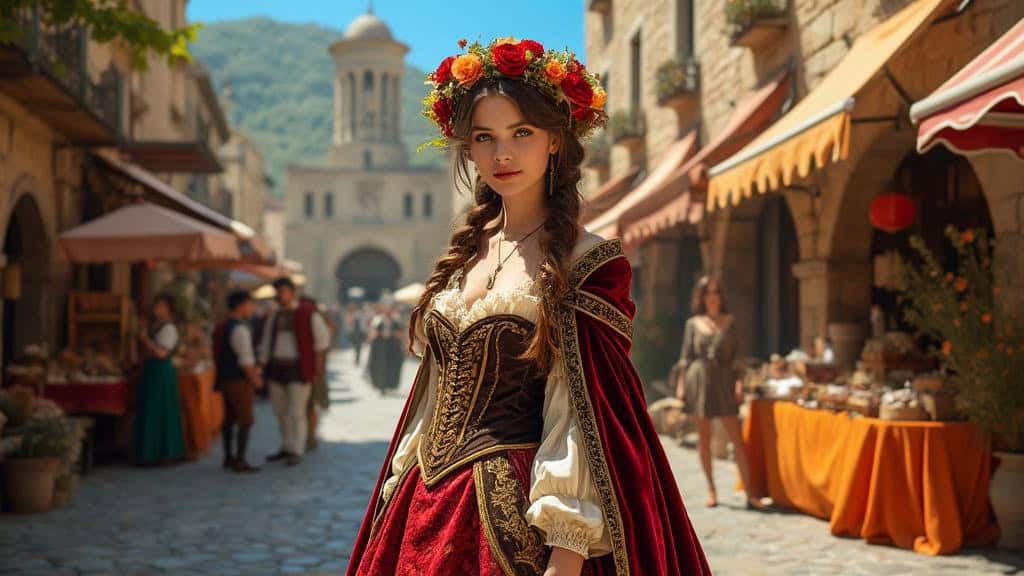
Alt text: Medieval market fashion scene.
Medieval fashion isn’t just making a subtle comeback; it’s storming the vintage scene like a knight charging into battle. This trend is bringing a treasure trove of dramatic silhouettes, rich textures, and timeless craftsmanship that’s revolutionizing how we view classic style.
This powerful fusion of medieval majesty and vintage charm isn’t just about looking back; it’s about reimagining centuries-old artistry for today’s fashion enthusiasts. From hand-stitched embroidery that tells stories to flowing sleeves that could’ve graced a lady’s chamber, these historical elements are breathing new life into vintage collections.
Medieval Motifs Shaping Vintage Trends
From the runways of Paris to local vintage boutiques, the raw authenticity of medieval-inspired designs is experiencing an unprecedented revival. While medieval armor protected warriors in battle, today’s vintage fashion incorporates the armor’s distinctive elements into statement pieces that command attention.
Decorative studs echo ancient battle gear, while intricate metalwork adorns everything from baroque-style handbags to ornate belt buckles.
The influence extends beyond metallic elements, weaving its way into fabric choices and silhouettes. Here are five medieval elements transforming today’s vintage fashion:
- Heavy brocades inspired by castle tapestries
- Velvet capes reminiscent of royal court attire
- Corseted bodices drawing from period garments
- Heraldic symbols and Gothic archway patterns
- Hand-stitched embellishments with burnished metal accents
These historical elements are revolutionizing how designers approach vintage fashion. Each piece tells a story, blending centuries-old craftsmanship with modern vintage appeal. Medieval fashion’s most distinctive design elements continue to influence modern vintage style, as shown in these transformative features:
| Design | Historical Purpose | Modern Revival |
|---|---|---|
| High necklines | Modesty & status | Elegant drama |
| Fitted bodices | Shape definition | Body conscious |
| Flowing sleeves | Class distinction | Romantic style |
The result is a captivating fusion of historical gravitas and vintage charm that resonates with fashion enthusiasts seeking pieces with depth and character.
| Fun Fact: The revival of medieval-inspired fashion has led to a surge in popularity for armor boots and cloaks on modern runways, blending fantasy aesthetics with streetwear sensibilities. |
|---|
Cultural Crossroads of Fashion and Society
Fashion’s most dramatic shifts mirror deep social transformations, and few eras showcase this better than the Roaring Twenties. This period brought a radical departure from stuffy Victorian standards, as clothing styles evolved into more relaxed and expressive forms. Women traded their restrictive corsets for dropped waistlines, while men embraced softer, less formal attire.
Today’s vintage fashion scene draws fascinating parallels between medieval and modern expressions. The ways people choose to dress continue to reflect broader cultural shifts and personal identity.
The connections between past and present fashion reveal these key patterns:
- Medieval-inspired elements like high necklines and flowing fabrics appear in modern vintage pieces
- Color symbolism from medieval times influences contemporary vintage palettes
- Traditional embroidery patterns find new life in current designs
The creative fusion between historical and contemporary styles has sparked a fresh wave of self-expression through vintage fashion. Just as the flappers of the 1920s broke free from traditional constraints, today’s vintage enthusiasts blend medieval elements with modern sensibilities to craft unique personal statements.
This mix of old and new allows fashion lovers to honor historical craftsmanship while expressing their individual style preferences.
Rediscovering Historical Craftsmanship
Vintage fashion has found fresh inspiration in medieval craftsmanship, with artisans and designers embracing age-old techniques that bring authenticity to modern pieces.
Hand-stitching, intricate metalwork, and detailed embellishments from the medieval era have sparked a creative renaissance in vintage clothing creation. These traditional methods aren’t just about aesthetics – they’re breathing new life into sustainable fashion practices.
The revival of medieval artisanal techniques has introduced several essential elements to vintage fashion:
- Hand-sewn details that showcase personal attention and create unique patterns
- Traditional metalwork methods for buttons, clasps, and decorative elements
- Natural dyeing processes using plant-based materials
- Custom-fit adjustments inspired by medieval tailoring
The fusion of medieval artisanal skills with vintage fashion has created a meaningful shift in how we view clothing production. More creators are choosing these time-tested methods, recognizing that sustainable practices from centuries ago offer solutions for modern fashion challenges.
This blend of old and new hasn’t just preserved historical techniques – it’s created a fresh approach to vintage fashion that values quality, durability, and individual expression.
Silhouettes Inspired by the Past
Fashion’s evolutionary journey through time has brought remarkable transformations in how we perceive and wear clothing. The straight silhouettes that defined 1920s fashion didn’t just appear out of nowhere – they emerged from centuries of style evolution, including meaningful influences from medieval clothing designs.
These tubular silhouettes marked a bold departure from the restrictive corseted styles of previous decades.
The shift to looser, more relaxed forms reflected deeper societal changes. Just as medieval garments balanced function with form, the new fashion revolution of the 1920s prioritized comfort and movement. This transformation gave women newfound freedom in both their wardrobes and their lives.
Here’s how the 1920s fashion movement translated those ideals into everyday style:
- Simple, clean lines replaced ornate Victorian structures
- Drop-waist dresses created a more natural body shape
- Loose-fitting garments allowed easier movement
- Practical designs drew inspiration from medieval working clothes
Today’s vintage enthusiasts can spot these medieval influences in many beloved pieces from the past century. The practical nature of medieval clothing, with its straight cuts and functional design, continues to inspire modern interpretations of vintage style.
These enduring elements show how historical fashion innovations shape our current understanding of style and self-expression.
| Expert Tip: When studying historical silhouettes, look beyond the trends. You’ll notice how fabric choices and tailoring techniques from earlier eras subtly resurface in contemporary vintage-inspired pieces. |
|---|
Timeless Fashion Legacy
The marriage of medieval aesthetics with vintage fashion demonstrates how historical elements continue to shape and enrich modern style expressions. Through this exploration of medieval influences in vintage fashion, we have discovered how ancient craftsmanship techniques and symbolic elements create deeper meaning in contemporary wardrobes.
The enduring appeal of medieval-inspired vintage pieces reminds us that fashion is more than just clothing, it’s a bridge connecting us to centuries of human creativity and cultural expression.