
The Glow That Never Stopped Calling People Back
There is something emotionally direct about neon. It is not only light. It is mood. When a sign hums at dusk, it turns an ordinary street into a scene. It makes people slow down, look up, and feel that small rush of wonder that comes from color floating in the dark. That is why vintage neon signs are returning. Not as kitschy props, but as a real part of how towns express identity and welcome visitors.
This resurgence is tied to a larger desire for places with character. Many people are tired of bland storefronts and identical branding. Towns want their Main Streets to feel alive again. Neon offers exactly that. It is handmade, imperfect in a beautiful way, and tied to local memory.
What Counts As Vintage Neon
A Craft Built From Glass And Fire
True neon is created by bending glass tubes by hand, then filling them with gas and sealing them so electricity can excite the gas into glow. Different gases and coatings produce different colors. This is why neon feels warmer and more alive than many LED signs. It is not flat light. It is light with depth.
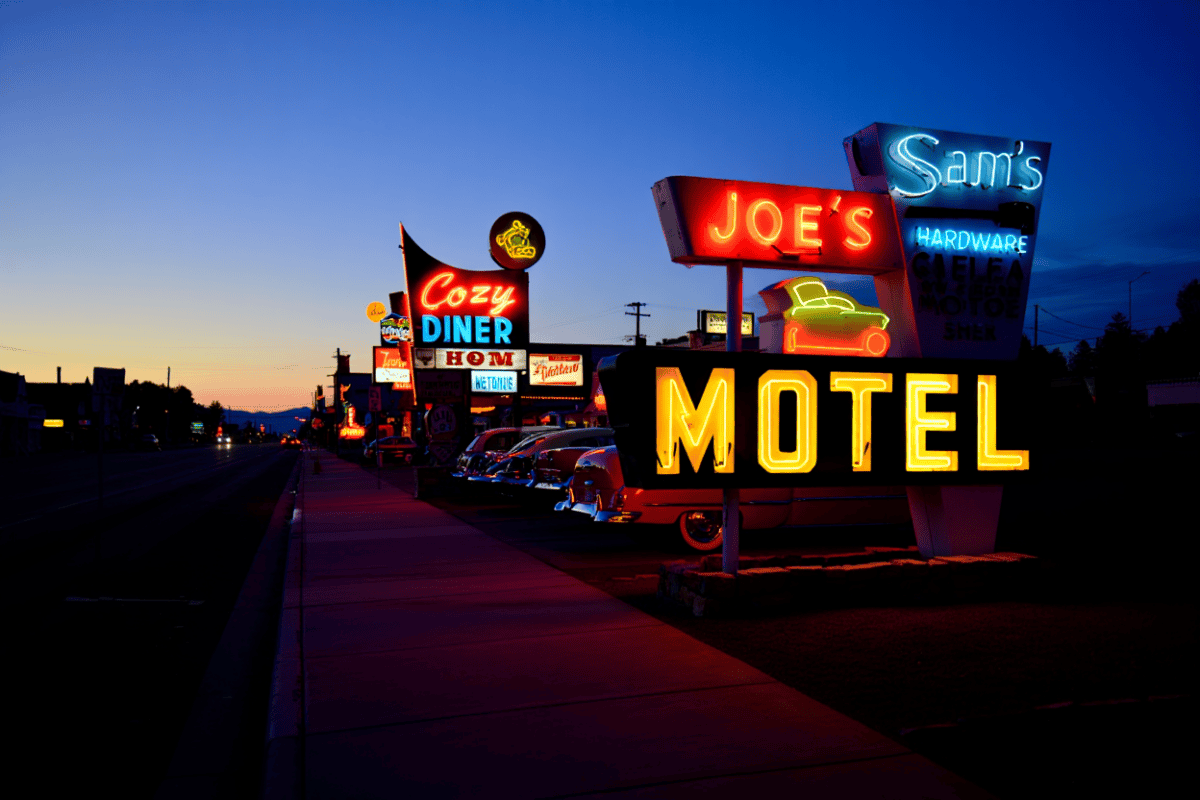
When people talk about vintage neon signs, they often mean signs from the 1930s through the 1970s, when roadside travel and downtown commerce were expanding quickly. These signs were built to be visible from cars and to communicate quickly. A single word like DINER or MOTEL glowed like a promise from blocks away.
For deeper background on sign history and preservation, the Smithsonian and design archives often cover neon as part of American visual culture.
Why Neon Is Returning Now
Main Street Revival Needs Visual Identity
A Main Street revival is not only about new businesses. It is about restoring a feeling. People want a downtown where walking feels fun. They want a street that looks like it belongs to a real place, not a generic strip. Neon becomes a symbol of that difference.
A restored sign is also a way to tell a story without words. It signals heritage. It signals craft. It signals that someone cared enough to preserve what made the town unique.
Nostalgia With A Purpose
Nostalgia can be shallow when it is only aesthetic. Neon’s return is often practical. It draws foot traffic. It encourages photos. It makes storefronts easier to find at night. It becomes marketing without feeling like marketing.
This is why so many towns embrace Americana design elements such as vintage signage, painted murals, and classic storefront details. They want a street that feels memorable.
Small Businesses Want Differentiation
In a world where people discover places through images, a glowing sign can become a brand asset. A café with neon in the window appears on social feeds. A bakery sign becomes a landmark. A music venue with a restored marquee becomes part of the nightlife identity. Neon gives businesses a visual signature that screens and logos cannot replicate.
The Role Of Neon Restoration
Why Restoration Matters
Old signs are fragile. Glass tubes crack. Transformers fail. Metal backs rust. Weather damages wiring. Without intervention, historic signs disappear. Neon restoration keeps the original spirit alive while making the sign safe and functional.
A good restoration respects the typography, scale, and color of the original. Restorers often rebuild parts by hand, matching the old look as closely as possible. In many cases, they also upgrade components for safety, such as replacing wiring, stabilizing metal frames, and improving mounting.
The Balance Between Neon And LED
Some towns choose LED replicas because they are cheaper and easier to maintain. Yet neon lovers argue that LED does not have the same life. LED can mimic the shape, but it often lacks the soft glow and subtle flicker that makes neon feel human.
A balanced approach is becoming common. Some signs keep real neon for the main word and use LED for secondary accents. This protects the classic glow while lowering maintenance costs.
For a sense of how preservation programs approach signage and commercial heritage, you can explore resources from the National Trust for Historic Preservation.
National Trust for Historic Preservation
How Neon Shapes The Feeling Of A Street
Neon Creates Nighttime Walkability
One of the biggest challenges for small downtowns is nighttime energy. When streets are dark, people leave quickly. Neon adds warmth and visibility. It makes blocks feel safer and more inviting, which supports restaurants, bars, and evening shops.
Neon Encourages Local Rituals
A glowing sign becomes a meeting point. People say, meet me under the diner sign. The sign becomes part of local language. It also becomes part of seasonal rituals, especially when towns light signs for festivals or community nights.
Neon Is A Design Anchor
From an urban design perspective, signage creates landmarks. Landmarks make streets easier to navigate and more enjoyable to explore. Neon does this naturally because it stands out, especially at dusk. A single restored sign can anchor a block and make nearby businesses feel more alive.
Americana Design And The Return Of Roadside Charm
The Roadside Story Is Becoming Valuable Again
The midcentury roadside world shaped American travel. Motels, diners, bowling alleys, and theaters used neon to compete for attention. As road trip culture returns, people seek that visual language again. That is why retro signage is appearing not only on highways but also in small downtown corridors that want to feel like destinations.
The Emotional Effect Of Handcrafted Design
Neon carries the imprint of the maker. You can see it in the curves of letters and the imperfect alignment that makes a sign feel real. In an era of digital perfection, that handcrafted look feels comforting. It reminds people that places are built by humans, not by templates.
How Cities And Towns Support Neon Comebacks
Preservation Grants And Sign Programs
Some cities offer grants to restore historic signs because they understand the economic value. A restored marquee can boost tourism. A row of glowing storefronts can make downtown dining feel exciting again. Preservation focused funding often targets signage because the impact is visible immediately.
Design Guidelines That Encourage Character
Many Main Street programs adopt design guidelines that encourage signage with personality. They may limit oversized plastic light boxes and encourage handcrafted materials instead. Neon fits well into this vision because it reads as both nostalgic and premium when designed well.
If you want to understand how Main Street focused revitalization programs work in general, the National Main Street Center is a strong resource.
How Businesses Can Use Neon Without Looking Like A Theme Park
Keep The Message Simple
The best signs are short. One word. A name. A simple phrase. Too many words reduce impact. Keep typography bold and readable. The sign should be recognizable in a glance.
Match The Architecture
Neon looks best when it fits the building. A midcentury storefront can handle bold curves. A Victorian building may need a simpler shape and placement that respects trim. The goal is harmony, not novelty.
Use Color With Restraint
One or two strong colors often look more timeless than a rainbow. Pair neon with warm exterior lighting so the overall glow feels intentional rather than harsh.
The Cultural Value Of Saving Old Signs
Signs Preserve Local Memory
When a historic sign is restored, it often triggers stories. People remember first dates at the diner. Late nights at the bowling alley. Summers in town with grandparents. Neon becomes a memory object that belongs to the community, not only to the business.
Preservation Becomes Tourism
Visitors love places that feel specific. A neon lit downtown is instantly recognizable and photogenic. This supports tourism, local commerce, and community pride. It also encourages further preservation because people see visible proof that restoring the past can support the future.
Final Thoughts
The return of vintage neon signs is not only about style. It is about identity. It is part of a wider Main Street revival where towns want character, businesses want differentiation, and travelers want places that feel real. Through skilled neon restoration, communities are bringing back glow that once guided travelers home, one sign at a time.
When neon returns, streets feel warmer. Stories feel closer. And a simple walk at dusk becomes a scene worth remembering.