
I used to stand in front of my closet feeling like I had nothing to wear despite owning plenty. The pieces were there. Some thrifted, some inherited, some bought in a rush because the fabric felt right in my hands. But when it came to putting them together, something always felt off. Too busy. Too safe. Too much like I was wearing someone else’s idea of an outfit.
The shift didn’t come from a shopping spree or a closet purge. It came from slowing down and paying attention. Not just to clothes, but to colours, shapes, textures. The things that make an outfit feel like you instead of just correct.
What helped, oddly enough, was picking up a small creative habit that had nothing to do with fashion advice columns or Pinterest boards. It was simpler than that. And it changed how I see my wardrobe entirely.
Vintage style is already a creative practice
If you’re drawn to vintage, you already know this on some level. Thrifting isn’t passive shopping. It’s curation. You’re scanning racks with an eye for silhouette, fabric weight, era details, colour combinations that don’t exist in fast fashion anymore. You’re making decisions based on feel and instinct, not algorithms.
That’s artistry, even if we don’t call it that. Pattern recognition. Palette awareness. Understanding why a 1970s blouse works with modern denim and why another piece, objectively beautiful, just doesn’t belong in your world.
The problem is we often do this instinctively without naming it. And when something is unnamed, it’s harder to sharpen. Harder to trust. Harder to build on.
A small creative ritual that supports personal style
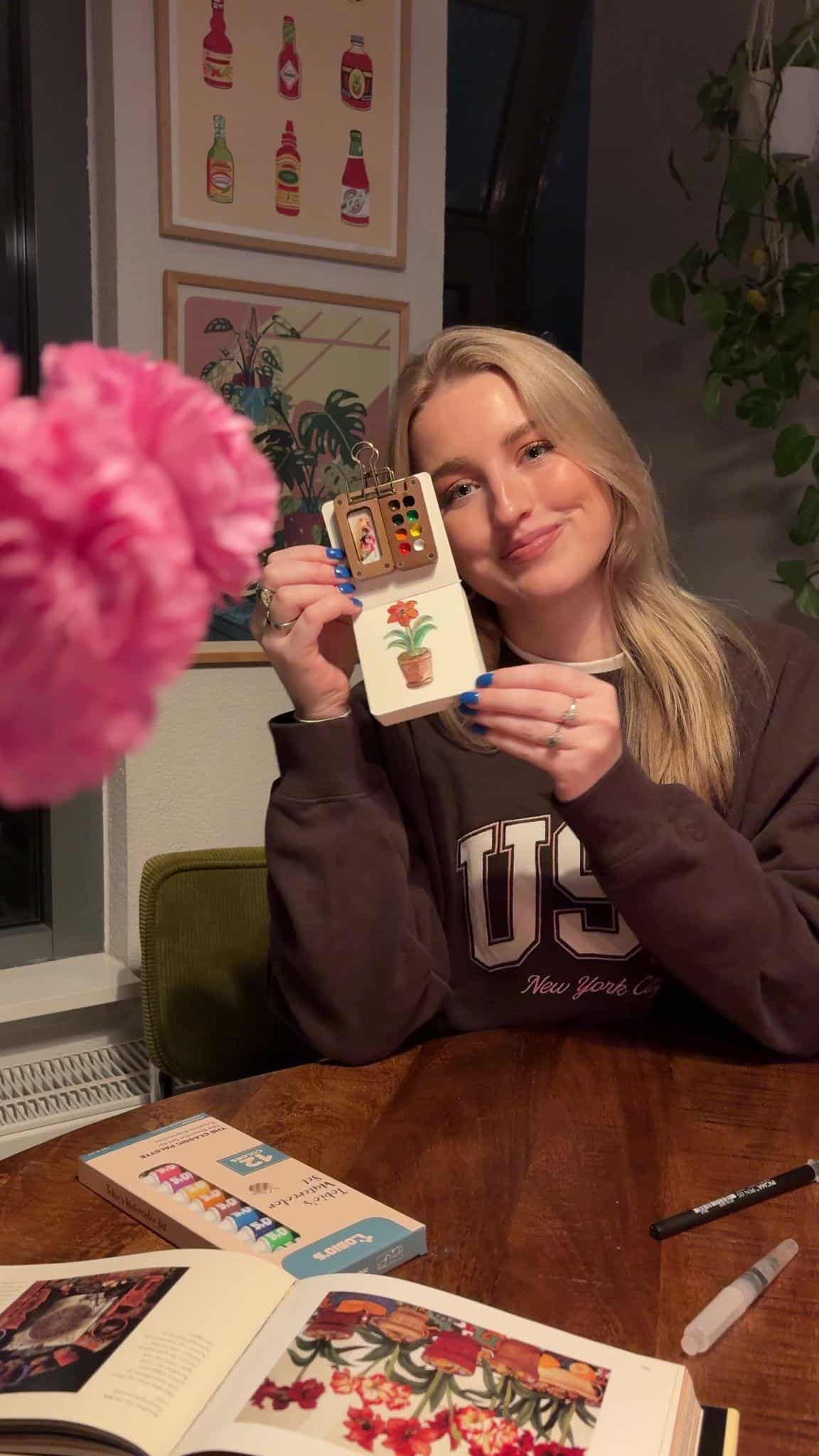
A while back I started keeping a tiny sketch routine. Nothing fancy, nothing that requires skill or time I don’t have. Just ten minutes, maybe two or three times a week, sitting with a simple watercolor setup and painting whatever caught my eye that day.
Sometimes it’s an outfit I wore. Sometimes it’s a color palette pulled from a scarf I found at the flea market. Sometimes it’s just three shades that felt right together when I noticed them on a walk.
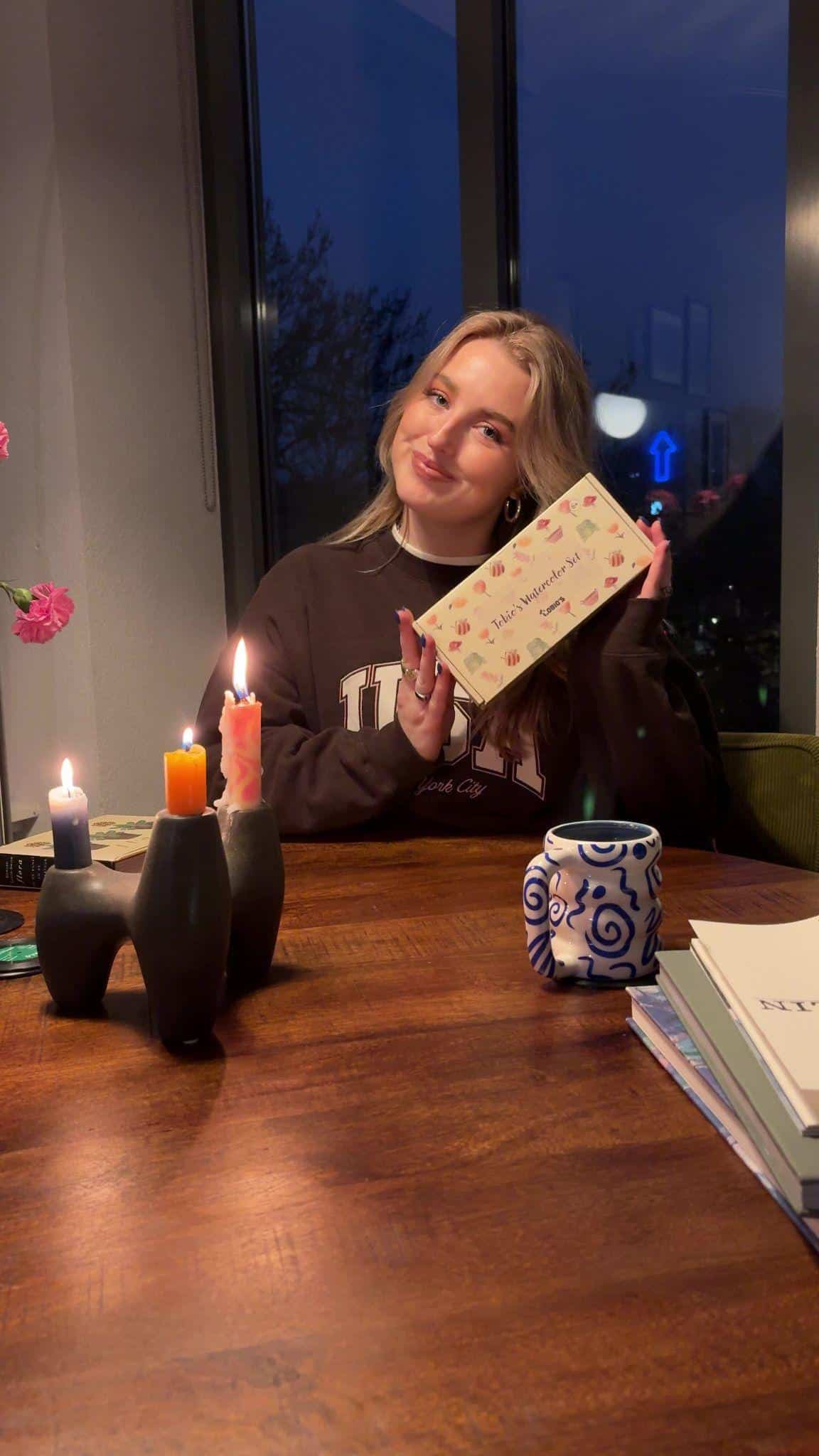
I started keeping a tiny “style and color” sketch routine using a simple watercolor setup (I’ve used kits like Tobio’s Kits when I want everything ready in one place), and it made outfit planning feel less chaotic and more intentional.
The point isn’t to make good art. The point is to notice. To slow down enough that you actually see what you’re drawn to instead of scrolling past it.
Three ways to turn thrift finds into style direction
This isn’t about turning your wardrobe into homework. It’s about using what you already own as creative input.
Color palette capture. When you bring home a thrift find, paint three or four swatches from it. The dominant color, the accent, the undertone you almost missed. Suddenly you have a visual record of what you’re naturally attracted to, and patterns start to emerge.
Texture study. Sketch the difference between a stiff denim jacket and a draped silk blouse. You don’t need to be precise. Just the act of looking closely teaches you why certain textures feel right on your body and others don’t.
Silhouette notes. A quick outline of an outfit, no details, just shapes. It shows you what proportions you reach for repeatedly. High waist and volume on top. Fitted everywhere. Oversized with structure. Once you see it, you can lean into it deliberately.
The surprising benefit: you stop impulse-buying
Here’s what I didn’t expect. After a few weeks of this ritual, I started shopping differently. Not less, necessarily, but sharper. I could recognize “my palette” instantly. I stopped picking up pieces that were beautiful but wrong for my world. I started building outfits around a visual theme I actually understood instead of hoping things would magically work together later.
It’s like having a filter you carry with you. Not restrictive, just clear. When you know what you’re drawn to, you stop second-guessing every purchase. You trust your eye because you’ve trained it.
Make it seasonal without buying a whole new wardrobe
This is where vintage lovers have an advantage. You’re already used to working with what exists rather than chasing new releases.
A seasonal shift doesn’t require a shopping trip. It requires attention. Winter might mean leaning into warm neutrals with one rich accent. Spring pulls you toward softer tones and lighter fabrics you already own but forgot about. Autumn is the moment for that rust-colored coat that felt too specific in July.
If you’re into era-inspired dressing, palettes become even more fun. A 1940s autumn in olive and burgundy. A 1960s spring in powder blue and white. You’re not copying costumes. You’re using history as a color guide.
What it looks like in real life
I want to be honest. Some weeks this ritual happens exactly as planned. Other weeks, life gets busy, and I paint one small swatch on a Sunday morning and call it done.
That’s fine. The habit isn’t about productivity or filling a sketchbook. It’s about maintaining a connection to what you find beautiful. Keeping your eye active. Remembering that style is something you build slowly, not something you buy in a single afternoon.
Last month I skipped two weeks entirely because things were hectic. When I finally sat down again, I painted the colour of a vintage cardigan I’d been wearing constantly without thinking about it. Dusty rose with grey undertones. I realised it was the same palette as the lipstick I reach for most and the flowers I always buy at the market. Coincidence, maybe. Or maybe I’ve always known what I like and just needed a way to see it clearly.
Style isn’t only about the clothes. It’s about noticing what resonates and trusting that over time, those choices add up to something coherent. Something yours.
If any of this sounds appealing, try the ten-minute version this week. One outfit sketch. One palette from a favourite piece. No pressure to make it beautiful. Just slow down enough to look.
That’s where personal style actually lives. Not in the shopping, but in the seeing.