
How Vintage Fashion Was Influenced by War-Time Fabric Shortages
Wartime fabric shortages had a tremendous impact on the vintage fashion world, especially in the 1940s. World War II began, and a lot of resources were redirected to be used to support the war needs. Materials such as wool, silk, and cotton were needed for uniforms, parachutes, and other pieces of war machinery. As a result of this, the civilian clothing production had to change.
Fashion designers and clothing manufacturers were relegated to work under a set of hard and fast rules concerning fabric rationing. These limitations led to more basic designs, shorter hemlines, and fewer decorative details. Although the restrictions were practical, they also resulted in a unique style of the era.
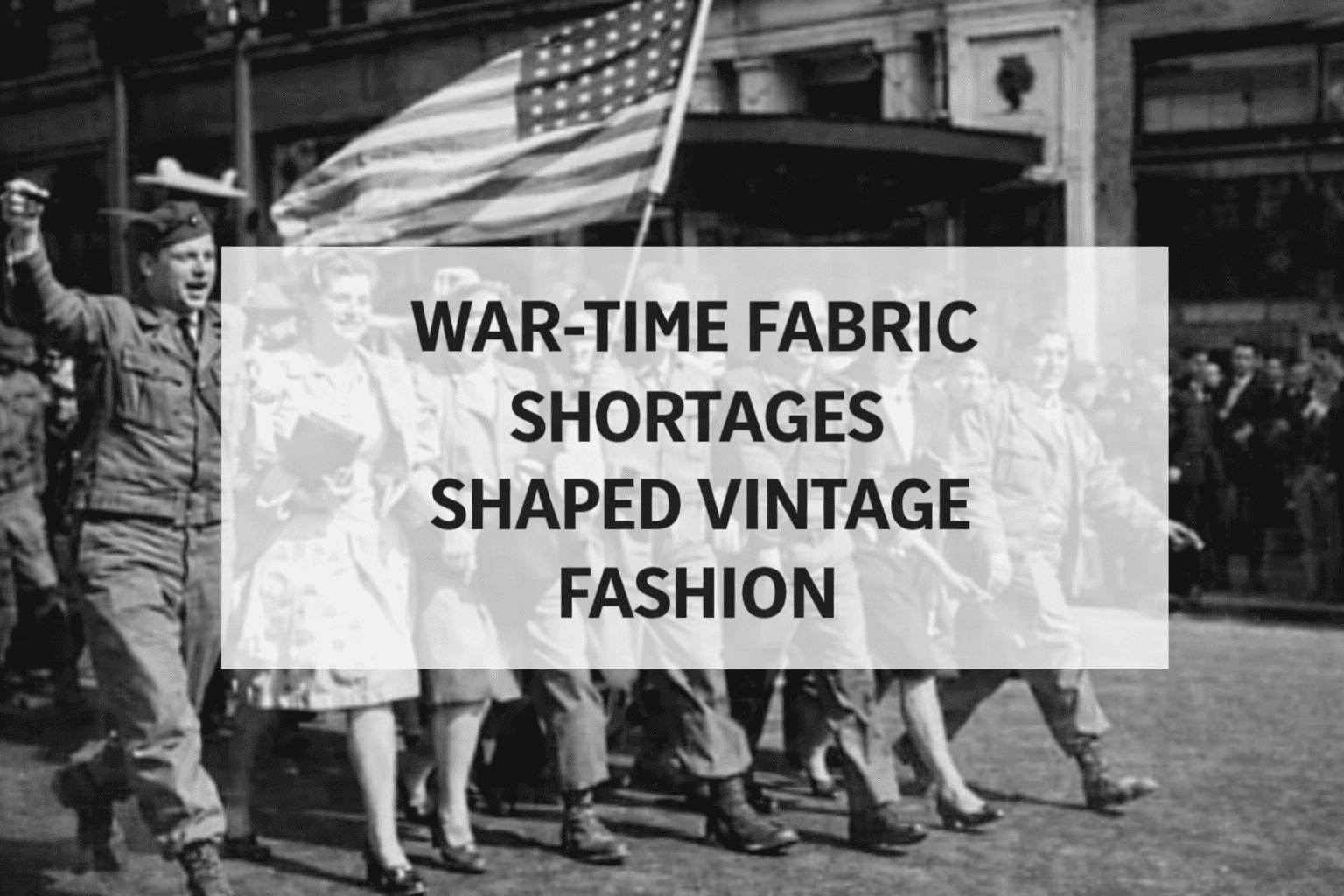
How Vintage Fashion Was Influenced by War
The clothes that were created back in this time presented a significant chapter in the history of fashion and still determine the vintage fashion in the present.
Government Rationing of Fabric
Regulations on the use of fabric for clothing were introduced during World War 2 by governments. In the United States, rules developed by the War Production Board were issued, which limited the amount of material that could be used to make garments. There were similar regulations in Britain and other countries that were engaged in the war.
These rules were made to conserve fabric to be used for military uniforms, tents, and other important equipment. Clothing manufacturers had to conform to strict guidelines for how clothes were made.
For example, there could not have been extra material in clothes to decorate them with. Wide skirts, huge pockets, and superfluous pleats were disapproved of as they wasted a lot of material.
These regulations changed how common people dressed.
Simpler and More Practical Designs of Clothing
Due to a shortage of fabrics for wartime purposes, clothing styles became more practical and streamlined. Designers were more interested in creating clothes with less material, but this was still neat and presentable.
Women’s dresses often had rather narrower silhouettes with narrower skirts. Jackets and coats were less seamed and less complicated in shape. Many clothes did not need more layers or heavy folds.
Even minute details were touched. Cuffs, decorative flaps, and wide collars were often removed from designs to save on fabric.
Although these changes had been enforced for practical reasons, they provided wartime fashion with a recognizable and distinctive style.
The Popularity of Two-Piece Outfits
Two-piece suits were especially popular in the war years. Instead of full dresses, many women wore skirts, which were worn with blouses or jackets.
This combination allowed for mixing and matching in an outfit, allowing more flexibility to wardrobes without having to buy additional fabric. It was possible for women to create many different outfits with fewer items of clothing.
Two-piece suits also became a common work outfit for women who were in the war work force. These suits were practical, durable, and suitable for office work as well as factory jobs.
The versatility of these outfits made them a practical solution in a time of restricted resources.
Alternatives to Fabric and get Creative Solutions
As traditional fabrics were harder to come by, designers and manufacturers tried out other fabrics. Rayon, which was developed earlier, gained great usage because it used fewer natural resources.
In some cases, clothes were made of recycled or repurposed fabric. People often cut up old clothes for new forms of clothing.
Home sewing became more common during this time, also. Many women made their own clothes using sewing patterns, and would use leftover material or use materials for different things.
These creative solutions helped families deal with shortages in clothing and still express style.
Utility Clothing Programs
Some countries introduced official clothing programs, which were state-sponsored, to encourage practical clothes during wartime. In Britain, a system was started by the government, “utility clothing.”
These clothes had to abide by certain design criteria in order to ensure that the least amount of fabric would be used while still remaining a high-quality garment. Utility clothing was inexpensive and long-lasting and generally offered to the masses.
Even though these garments were made under strict rules, it did not prevent design houses from finding ways to make stylish pieces due to the limitations.
Utility clothing became an important example of the adaptation of fashion during a time of war.
The Impact of Military Style
Wartime fashions were also affected by military uniforms. Structured jackets, strong shoulders, and some tailored lines became a common feature in civilian clothing.
Women’s jackets tended to feature such aspects as button fronts, simple collars, and useful pockets. These designs reflected the denatured and utilitarian nature of the times.
This military-inspired style had later become a signature trait of fashion in the 1940s, and continues to find its place in modern clothing designs.
Long-Term Impact on Retro Dressing
The clothes produced during the fabric shortage in wartime had a powerful influence on the world of vintage clothing. The emphasis on simple lines, no-nonsense designs, and the effective use of materials became characteristic traits of 1940s style.
Many designers later went back to these ideas while creating new clothing collections. Structured silhouettes and minimalist designs tend to be inspired by wartime clothing.
Today, vintage clothes dating from the war years are not only admired for their style, but also for the history they represent. They remind us of the way fashion adapted to a time when creativity and practicality needed to work together.