
Combining pieces from different eras is one of the most creative approaches to personal style. When done thoughtfully, vintage clothing paired with modern accessories creates outfits that feel original rather than costume-like. Fashion has always borrowed from the past, and many influential designers have built careers on revisiting older silhouettes and reinterpreting them for current audiences. This kind of dressing is less about following rules and more about developing an eye for what works together visually and texturally.
What makes era-mixing so compelling is the contrast it creates. A 1970s silk blouse gains new life when worn with sleek, architectural jewelry. A structured 1980s blazer becomes something entirely fresh styled alongside minimalist sneakers and a contemporary crossbody bag. The clothing carries history and character while the accessories ground the look in the present. Getting comfortable with this balance takes practice, but it starts with a few foundational principles that make the process feel intuitive rather than overwhelming.
Understanding the Visual Weight of Each Era
Every decade in fashion history has a distinct visual language. The 1950s favored nipped waists and soft feminine details. The 1970s leaned into natural fabrics and flowing silhouettes, while the 1980s embraced volume and bold color combinations. Knowing these characteristics helps you make deliberate choices rather than accidentally creating outfits that clash in unproductive ways.
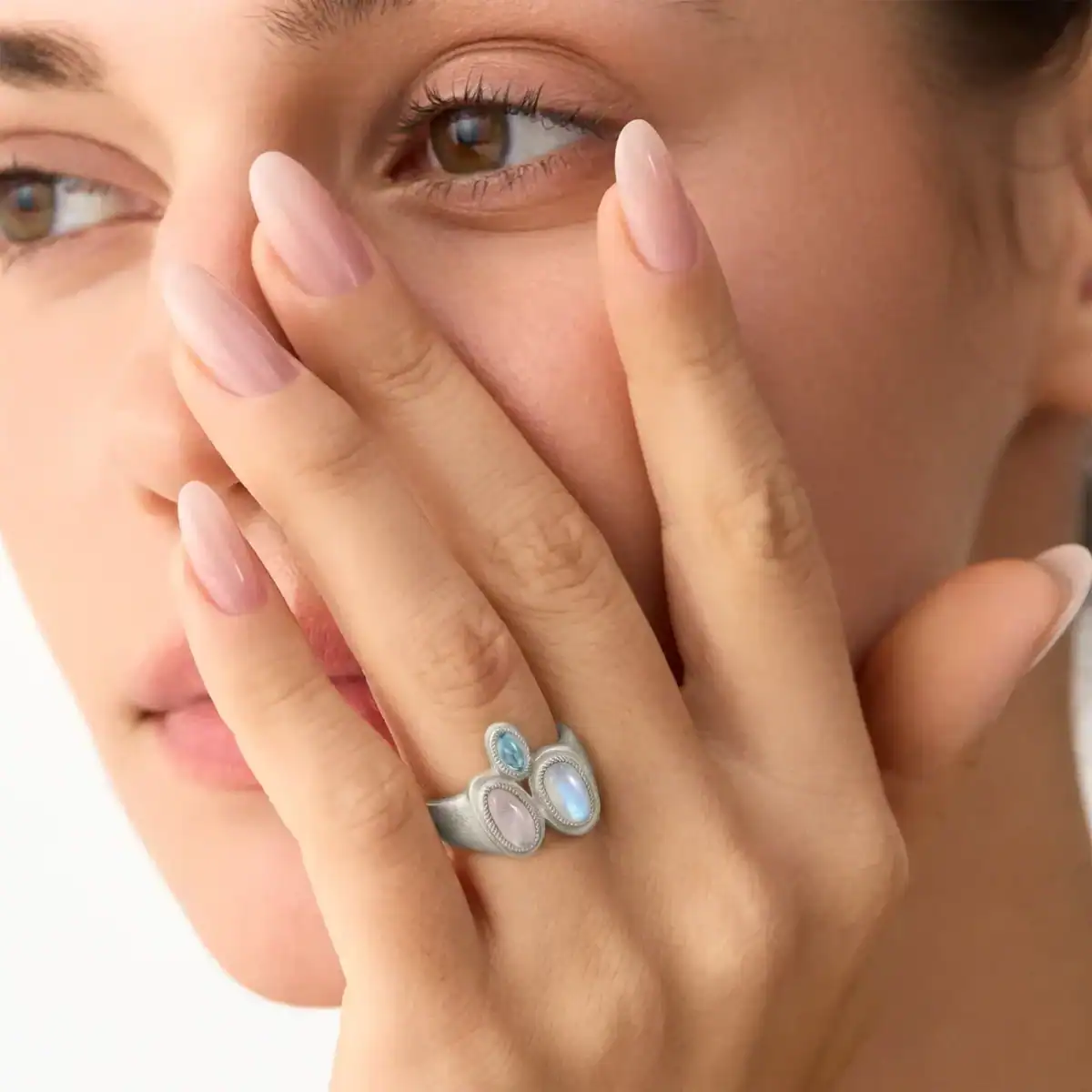
When mixing eras, the most successful approach is to let one era dominate and allow the other to accent. If your base is a 1970s wrap dress, your accessories should feel current without competing for attention. Choosing a vintage-style ring with organic stone details, such as moonstone or rose quartz set in asymmetrical metalwork, threads a connection between time periods without making the outfit feel like a costume. These pieces carry the character of older craftsmanship while remaining elegant alongside modern elements.
Visual weight also applies to proportion. Heavily embellished vintage pieces generally pair better with restrained modern accessories, while understated vintage clothing can support bolder contemporary additions. A plain 1960s shift dress, for instance, can handle a geometric modern handbag and structured mule sandals without the outfit feeling overcrowded.
The material quality of genuine vintage clothing, whether silk, wool crepe, or cotton twill, has a texture and drape that communicates craftsmanship. Pairing these fabrics with accessories that also carry some intentionality in material or design tends to produce more cohesive results than mixing them with purely trend-driven pieces.
Choosing Contemporary Accessories That Honor the Original Aesthetic
Modern accessories work best with vintage clothing when they share at least one visual element with the original garment. That connection could be a color, a material, a shape, or a general mood. A tailored 1940s suit in charcoal grey might pair naturally with a contemporary structured leather bag in warm camel. The formality of the suit finds a partner in the structured bag, while the color contrast keeps the look from appearing dated.
Jewelry is one of the most powerful tools in this process. Contemporary pieces that use natural or semi-precious stones bridge eras seamlessly because stone settings have appeared across centuries of fashion history. A moonstone ring with an irregular, organic silhouette, for example, feels equally at home alongside a 1970s peasant blouse or a modern linen blazer. Moonstone has been used in jewelry since the Art Nouveau period and carries associations with handcraft and natural beauty that transcend trend cycles.
Shoes and bags tend to date an outfit more quickly than jewelry, so choosing contemporary versions in classic shapes is often the safest approach. A pointed-toe flat, a simple leather loafer, or a structured rectangular bag avoids the problem of two competing trend moments on one person.
How Color Guides Cohesion Between Old and New
Color is one of the most reliable tools for making mixed-era outfits look intentional. Each fashion decade had a distinct color palette. The 1970s favored mustard, rust, olive, and warm browns. The 1990s leaned toward muted tones like slate blue, taupe, and burgundy. When modern accessories share even a single color from the vintage garment’s palette, the outfit reads as curated rather than random.
Neutral accessories are a reliable strategy when the vintage piece features a strong or complex print. A 1960s mod dress in black and white graphic print pairs cleanly with white sneakers and a simple black leather bag, allowing the print to lead while the accessories support without competing.
Metallic tones in jewelry offer another point of connection between eras. Gold tends to complement warmer vintage palettes like those common in 1970s pieces, while silver reads more naturally alongside the cooler, more industrial aesthetics of 1990s clothing. Mixed metals, once considered a style error, have become a contemporary norm that works particularly well with eclectic vintage styling.
Practical Layering Techniques for Mixed Wardrobes
Layering is where vintage and contemporary pieces interact most directly. The inner layer is usually where the vintage piece lives, whether a slip dress, a printed blouse, or a tailored vest. Contemporary outerwear layered on top, such as a current-season trench coat or an oversized denim jacket, provides a modern envelope around the older piece.
Texture contrast makes layering more interesting. Wearing a chunky vintage knit sweater under a sleek modern coat in technical fabric creates a tactile dialogue between the two garments. The handmade against the industrial produces an outfit with depth and personality that a purely contemporary or purely vintage look might not achieve.
Belts deserve specific attention because they can visually unite pieces from different eras. A wide leather belt cinched over a 1980s oversized blazer reinterprets the silhouette in a more current way. A thin, braided vintage belt worn over a contemporary linen dress adds character without altering the overall mood of the outfit.
Building a Wardrobe That Works Across Eras
Sustainable mixing requires a wardrobe that functions as an ecosystem rather than a collection of isolated outfits. This means buying vintage pieces with an eye toward what you already own, and choosing contemporary accessories that work across multiple vintage items. A well-chosen piece of jewelry, a quality leather bag in a neutral tone, or a pair of clean-lined shoes can anchor dozens of different vintage combinations.
Thrifting and estate sale shopping reward patience and specificity. Rather than buying vintage pieces without a plan, it helps to identify a few target eras and silhouettes that consistently appeal to you. Someone drawn to 1930s bias-cut dresses has very different accessory needs than someone who gravitates toward 1990s grunge-adjacent pieces. Building around a defined aesthetic produces a wardrobe that mixes more effortlessly over time.
Care and condition matter more with vintage than with contemporary clothing. A 1970s blouse in excellent condition will always look more intentional alongside modern accessories than a visibly worn piece in the same style. Proper storage, gentle cleaning, and occasional professional tailoring extend the life of vintage finds and keep them looking like deliberate choices.
Where Personal Meaning and Style Intersect
Vintage clothing often carries history attached to it, sometimes known, sometimes imagined. A coat found at an estate sale, a dress purchased abroad, a brooch inherited from a relative all carry a kind of weight that contemporary mass-produced accessories rarely match. Pairing these pieces with modern accessories keeps older objects in active use and in conversation with the present.
Contemporary accessories chosen with care can honor that meaning without erasing it. A modern ring with handcrafted stone settings shares a relationship with older jewelry traditions, even if it was made recently. The craftsmanship references the past while the design lives in the present, making it a natural companion for clothing that does exactly the same thing.
A Personal Style Built Gradually and With Intention
The strongest mixed-era wardrobes are assembled slowly, with patience and accumulated knowledge about what works and what doesn’t. No single purchase produces timeless style. It emerges from repeated choices made over time, from learning which vintage eras resonate with you, which contemporary accessories integrate most naturally into your existing wardrobe, and how to use color, texture, and proportion to create outfits that hold together visually. The result is a way of dressing that is both rooted in history and fully alive in the present.