
A Beginner’s Guide to Dating Vintage Clothing by Labels and Tags
One of the most surefire ways to determine the age of vintage clothing is to look at the labels and tags on the clothing. These small details often give an important clue about the time period in which a garment was made. While fabric, stitching, and design may provide clues to the time period, in most cases, the labels may provide more direct evidence.
The vintage clothing labels were changed over the years with the evolving fashion brands and manufacturing standards. Different decades brought different kinds of labels, care instructions, and union tags. By being familiar with how to look for these details, beginners may be able to narrow down the date that a garment was made.
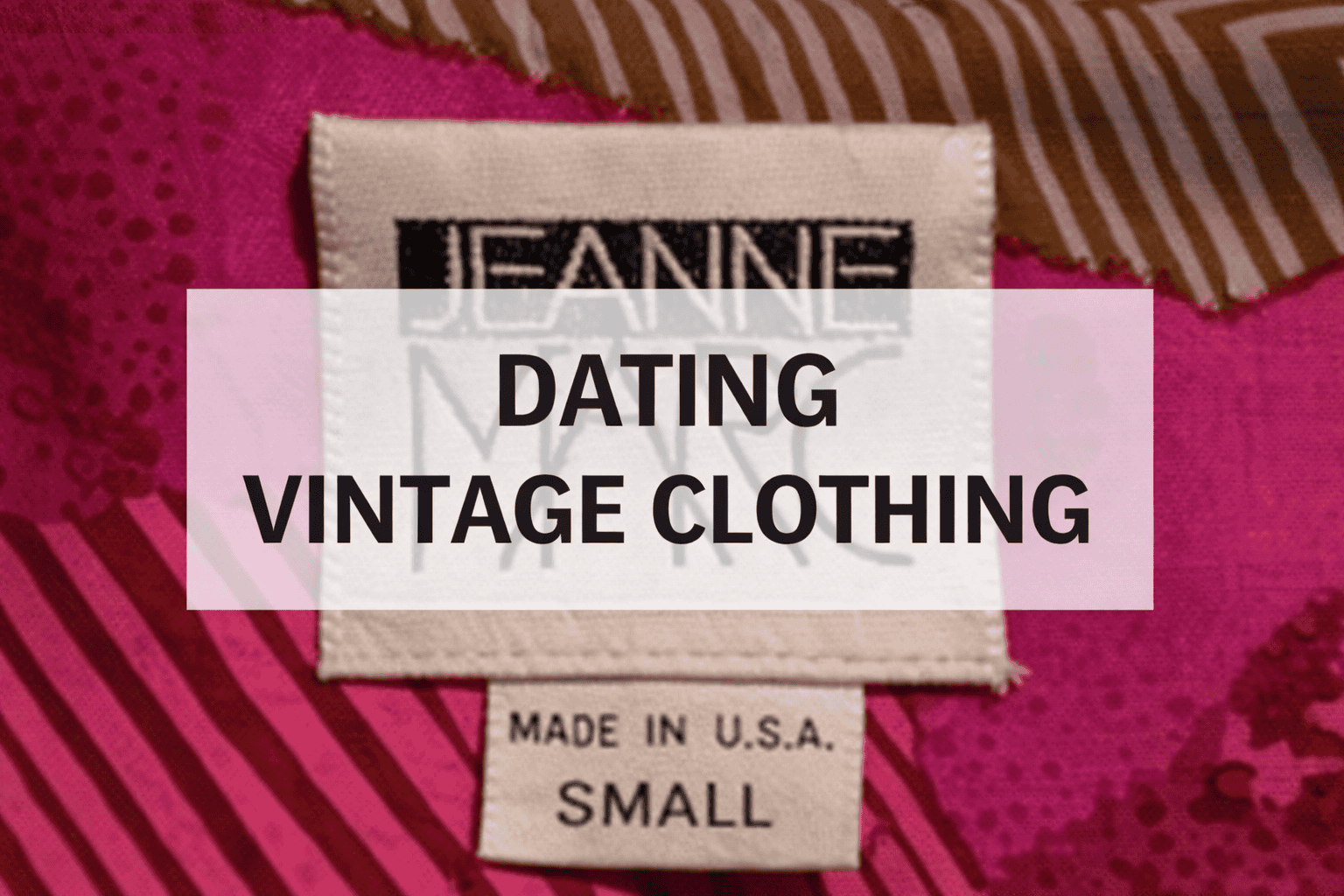
Guide to Dating Vintage Clothing by Labels and Tags
Knowing what vintage clothing labels are important when shopping in thrift stores, vintage shops, or online marketplaces, where accurately dating is important.
Early Labels Were Simple and Minimal
Many early garments made in the 1930s and 1940s had very simple labels. These labels were often small pieces of fabric sewn into the neckline or side seam. Often, they only contained the brand name or the name of the clothes manufacturer.
During this period, it was not uncommon for clothing labels to not even provide a lot of information, such as fabric content and care instructions. Most garments were made of natural fibers, and care for clothes was largely known to the user.
Because these early labels were simple and occasionally faded with the passage of time, identification may require careful examination of the stitching and the text remaining.
The Importance of Union Labels
Union labels are also a useful tool when dating vintage clothing. In the United States, workers who went into making clothing were frequently members of labor unions that instilled distinguishing labels in the clothing.
One very familiar item is the International Ladies’ Garment Workers’ Union (ILGWU) label. These tags were found in the garments of many women of the mid-twentieth century.
Union labels changed design a number of times over the years. Differences in logo style, wording, and color can help to narrow the decade of when the garment was made.
Because of this, for vintage collectors, union labels are important reference points in the estimation of the age of clothing.
Brand Labels and Changing Logo Designs
Clothing brands tend to change their labels and logos over the years. Such modifications can be used to identify the time of the creation of a garment.
For example, a fashion brand would have a label design that was used in the 1950s and then a different design adopted in the 60s. Comparison of a label to known historical versions can help narrow down when it was made.
Vintage collectors sometimes retain reference images of brand labels from different decades. This way, they can compare fonts, colors, and shapes when looking at garments.
Even small details, such as the style of lettering on it or the placement of the label, can give clues about age.
Labelling Care – Labels & Fabric Information
Care labels are also an important source of dating clues. In many countries, precise care instructions had not been necessary until the end of the 20th century.
In the United States, the Federal Trade Commission in 1971 brought the United States Care Labeling Rule. After this time, most garments possessed tags that told how to wash, dry, or iron the garment.
If a piece of clothing lacks a care label, the piece could have been made prior to the early 1970s. However, this is only one clue and should be considered as well as other details.
Care labels can also contain information about the content of the fabric, which can help to confirm the era in which the garment was made.
Country of Manufacture
Another detail found on labels is the country in which the garment was produced. Previously, vintage clothing was often made domestically, particularly in the United States and Europe.
Better times followed in the next decades, with increased production all over the world. Labels indicating manufacturing from countries such as Hong Kong, Taiwan, or South Korea tend to be suggestive of garments from the 1960s until the 1980s.
While the country of origin, in itself, does not provide an exact date, it may help narrow down the possible time period when used with other clues.
Font Styles and Intaglio Materials
The physical appearance of a label can also provide useful information. Labels of previous decades were often woven fabric with the letters stitched in.
Later labels sometimes used typewritten materials or manmade fabrics. Font styles also changed along with fashion trends. For instance, labels made in the 1950s commonly used elegant script fonts, and labels for the 1970s sometimes included bold or experimental lettering.
Looking at these visual elements with great care can yield extra clues about the age of a garment.
Combining Multiple Clues
The dating of old clothes is rarely based on one detail. The most accurate estimates are usually made by viewing several elements together.
Labels, union tags, types of fabrics, stitching techniques, and garment construction all give pieces of the puzzle. When you take these details into account altogether, it is easier to determine the decade in which the clothes were manufactured.
With practice, vintage shoppers can learn how to quickly recognize these patterns, both while in stores and while going through online listings.
Learning to Identify Vintage Labels
For the novice, the experience of learning to date vintage clothing by labels and tags requires some time and observation. Looking at a lot of different garments from different decades helps to develop the ability to recognize little details that point to age.
Reference books, vintage clothing guides, and online archives are also valuable resources to consult for like-for-like comparison of label designs.
As years pass, these skills make vintage shopping more rewarding. Recognizing the presence of authentic vintage clothing lets collectors and fashion enthusiasts appreciate the craftsmanship and history behind each garment.