
Flip through a runway lookbook this season, and you may notice familiar details returning in unexpected ways: a chunky 90s loafer updated in buttery leather, a 70s platform sole paired with a minimalist upper, or a Mary Jane silhouette inspired by a 1940s catalogue. Vintage footwear is influencing more than individual trends. It is shaping how modern shoe collections are imagined, developed, and refined.
Designers are revisiting historic shapes while adapting them to contemporary tastes, comfort expectations, and production standards. Understanding how these nostalgic references become wearable, commercially viable shoes offers a fascinating look into modern footwear design.
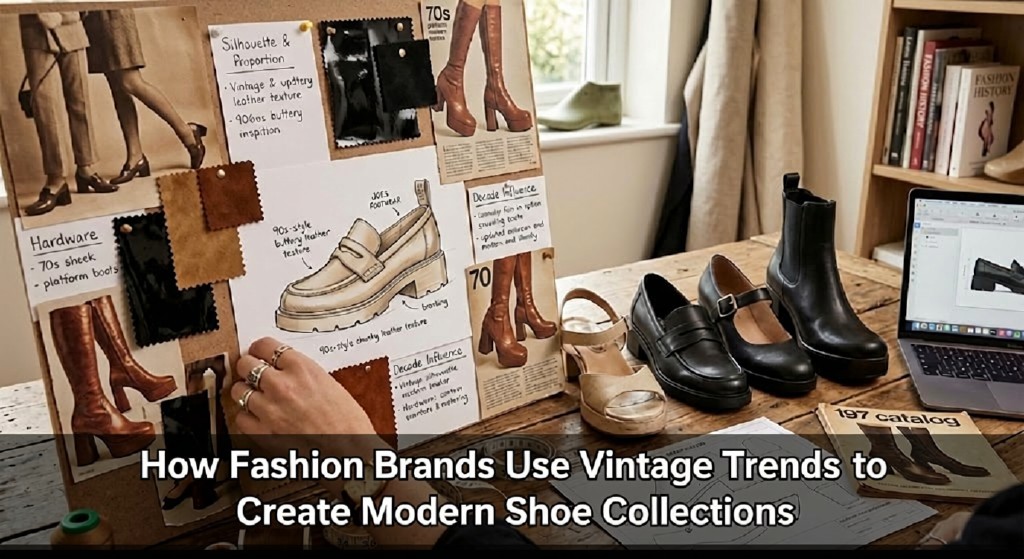
Designers are revisiting historic shapes while adapting them to contemporary tastes, comfort expectations, and production standards. Understanding how these nostalgic references become wearable, commercially viable shoes offers a fascinating look into modern footwear design.
Why Vintage-Inspired Fashion Has Become Such a Powerful Business Driver
It helps to understand just how significant this shift has become at a market level. According to ThredUp’s 14th Annual Resale Report , the global secondhand market is projected to reach $393 billion by 2030, with the U.S. resale market outpacing broader retail growth by four times, and secondhand fashion overall on track to outpace new clothing sales two-to-one over the next five years.
That scale matters because it confirms vintage-driven demand isn’t a passing nostalgia trend, it’s a genuine, sustained shift in how people shop, dress, and think about style. Fashion brands designing new collections are responding directly to that shift, not guessing at it.
What Actually Gets Borrowed From a Vintage Silhouette
Brands rarely reproduce a vintage shoe exactly. Instead, a handful of specific design elements tend to get pulled forward and reworked:
- Silhouette and proportion, like a rounded 1960s toe box or a dramatically stacked 1970s heel, adapted to fit contemporary sizing and comfort expectations
- Hardware and detailing, buckles, straps, and stitching patterns pulled directly from a specific decade’s signature look
- Colour palettes and materials, reviving finishes like patent leather or suede combinations that defined a particular era
- Construction techniques, occasionally reintroducing traditional methods that modern manufacturing had largely moved away from
None of these elements gets borrowed in isolation, it’s usually a careful combination of two or three that signals a specific decade without tipping into costume territory.
How a Vintage Concept Actually Becomes a Sellable Product
This is really the middle of what most people never see: the gap between a mood board full of decades-old inspiration and an actual pair of shoes sitting on a retail shelf. A designer’s vintage-inspired sketch has to be translated into a genuine, production-ready technical package, accurate measurements, material specifications, construction details, before it can become anything a customer can actually buy.
This is exactly the stage where working with an experienced private label footwear manufacturer becomes essential to a brand’s vintage revival strategy. Turning a nostalgic silhouette into a comfortable, durable, and manufacturable shoe requires genuine technical expertise. Vintage construction methods were not always designed around modern comfort standards or manufacturing efficiency.
Joes Footwear can help brands bridge that gap by combining traditional design influences with modern production knowledge, ensuring that revived footwear is both visually appealing and practical for today’s customers.
Why Certain Decades Keep Coming Back Into Style
Fashion trends don’t cycle randomly. A handful of patterns explain why specific eras resurface again and again in footwear design:
- Generational nostalgia brings a decade back roughly 20 to 30 years after its original peak, as the generation that grew up around it reaches prime spending age
- Cultural moments, like a popular film or television series set in a specific decade, can accelerate interest in that era’s aesthetic
- Social media rediscovery exposes younger shoppers to decades they never experienced firsthand, creating fresh demand for styles with no personal nostalgia attached at all
- Sustainability motivations draw some shoppers toward vintage-inspired design specifically because it feels less disposable than fast-fashion trend cycles
Understanding which of these forces is actually driving a given trend helps a brand tell the difference between a fleeting moment and a genuine multi-season opportunity worth building a collection around.
Balancing Authenticity With Modern Expectations
A shoe that’s too faithful to its vintage source can end up impractical, stiff soles, narrow fits, or materials that don’t hold up to daily wear the way modern customers expect. The real skill in vintage-inspired footwear design lies in capturing the visual spirit of an era while quietly upgrading everything a customer won’t consciously notice, comfort, durability, and fit, using materials and construction methods that weren’t available when the original style first appeared.
What This Means for the Future of Footwear Design
As resale and vintage culture continue growing at the pace the data suggests, brands have a genuine incentive to keep mining fashion history for inspiration rather than treating vintage revival as a one-off trend cycle. The shoe collections that succeed with this approach tend to be the ones that treat vintage inspiration as a genuine starting point for reinvention, not a costume to simply recreate.
So How Does This Process Actually Work, Start to Finish?
Pulling this together into a clear answer: fashion brands use vintage trends by identifying a specific decade’s defining silhouette, detailing, or material, then deciding deliberately which elements to preserve for authenticity and which to update for modern comfort and manufacturability. That vintage-inspired concept then moves through a genuine technical process, pattern development, material sourcing, and construction planning, that turns a nostalgic sketch into a shoe someone can actually wear comfortably every day. The result isn’t a museum reproduction, it’s a new product that borrows just enough from the past to feel familiar and just enough from the present to feel genuinely wearable.
Conclusion
Fashion brands use vintage trends to create modern shoe collections by identifying the specific silhouettes, details, and materials that defined a past era, then working through the genuine technical process of translating that inspiration into a comfortable, manufacturable, contemporary product.
Given how significantly vintage and secondhand culture continue shaping consumer demand, understanding this translation process, from mood board to finished shoe, explains why the past keeps finding its way onto shelves dressed in distinctly modern clothing.