You want proper 1950s clothing, and as so much sold as ‘vintage’ isn’t, understanding the labels and tags is key.
They’re fantastic at showing you how old something is, where it came from, and, most importantly, whether it truly is from that time. Once you know what to look for, you’ll soon tell a genuine 1950s item from a newer copy, and it’s surprisingly straightforward.
How to Identify 1950s Vintage Clothing Label
When you really start to examine them, a garment label is a little bit of fashion history sewn into clothes. They may not seem like much, but they’re often the most dependable way to find out when and where a vintage garment was created.
Learning to decipher these details, for both seasoned collectors and those just starting out, will protect you from spending money on something that doesn’t help you put together a really authentic collection.
Why Are Labels and Tags So Important?
They’re one of the quickest ways to get a feel for how old a vintage item is.
In the 1950s, they were usually much smaller and much less fussy than they are now, typically just displaying the brand and maybe where it was made, and not much else. You won’t find lengthy washing directions, barcodes, or lists of fabric content as you do now, and an overly detailed label immediately points to a later production date.
Also, a lot of clothes were made by small dressmakers or local companies, so labels could be very plain or even missing altogether. Labels should be your guide, but not the only thing you look at. But if they are there, they’re one of the clearest places to begin when determining if something is original.
Do Look for Union Labels
A union label is a really good indication of a 1950s piece. A lot of clothing made in the United States during the decade had a tag from the International Ladies’ Garment Workers’ Union (ILGWU labels), and the look of these tags shifted over the years, so you can often get a fairly accurate age from them.
They’re usually quite detailed with clear lettering, and recognizing one pretty much confirms its authenticity. While something without a label isn’t necessarily a fake, a real union label is a fantastic sign.
Collectors depend on these brand name labels a lot as they were official, and changed at known points in time. Get to know the different styles, and you’ll often be able to say when something was made to within a few years, which is very helpful for judging its value and genuineness.
Examine the Label’s Design and the Font
The label designs itself tell you a lot. 1950s labels generally favor elegant, handwriting-style fonts or uncomplicated, block lettering, usually fairly clean, with not much variety of colors and no really modern branding.
Current labels are typically much more refined, more complicated, and full of logos, symbols, and lots of extras. A label that looks too perfect or is heavily embellished is likely not from the fifties.
Also, consider how symmetrical it is and the quality of the printing. Vintage labels might have slight flaws, a little wonkiness in the stitching, or some fading, and that’s often a positive. Modern copies tend to be too sharp and perfectly even.
And What About “Made In” Tags?
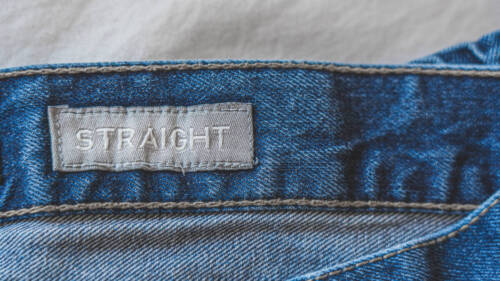
“Made In” tags are worth a look, but be careful. They didn’t become common until after 1960. Loads of clothes from the very early 1950s didn’t even have a ‘made in’ label, and if one is really particular, it probably means the item is from later in the decade.
But don’t go by that alone; use it with everything else you’re observing. It’s a supporting detail, really, and can be deceptive by itself, though it does contribute to a fuller, clearer understanding when considered with other characteristics.
Check Fabric Content and Materials
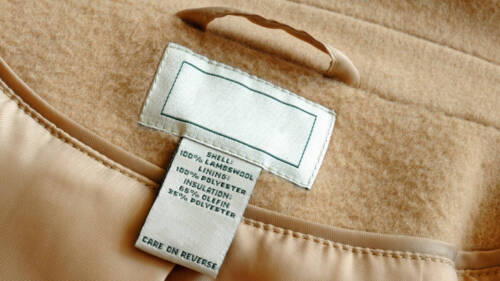
Then there are the fabric labels. Most fifties clothes don’t state fabric content in percentages – you won’t see “100% cotton” or “polyester blend” because that wasn’t how they did things.
Finding percentages points to a later time, and polyester, along with other man-made fabrics, weren’t really popular until after the fifties, so their presence helps you date the item.
Cotton, wool, silk, and rayon were the normal fabrics. If the material feels very modern or synthetic, that in itself is a pretty strong sign it isn’t from the fifties.
Look at the Vintage Tag Placement and Stitching
Look at how the label is attached, too. In the fifties, they were generally sewn directly to the garment, with fairly basic stitching, and it might even be a little off, a bit uneven, compared to today’s perfect, machine-done work. Nowadays, stitching is neat and precise, and labels are heat-sealed on.
Vintage tags that’s totally, flawlessly attached or printed onto the fabric isn’t likely to be from the fifties. And consider the thread and how worn it is: some fraying or age around the label can actually prove it’s genuine, while perfect stitching might suggest it’s newer.
Watch for Reproduction Labels
Be careful of copied labels. Lots of brands making vintage-inspired clothes are now making labels to look old – copying the font and design, but adding modern bits like care label or care instructions and fabric percentages. Always look at the entire garment, not just the label design. Something truly from the 1950s will have details that are all in keeping with the period.
Reproduction items aren’t necessarily a bad thing, but they should be identified as such. Knowing the difference means you’ll pay a fair price and won’t think a modern piece is a real vintage find.
Combine Labels with Other Clues
And, importantly, labels shouldn’t be considered in isolation. Examine the fabric, the stitching, the sort of zip used (metal was typical in the fifties, plastic came later), and how the garment is put together. The style and shape of the clothing will also give you a timeframe. Once all these things agree, you can be much more certain it’s true vintage pieces.
Vintage identification is at its best when everything fits. One correct detail isn’t enough, but lots of details that match build up your confidence.
Final Thoughts
In short, getting to grips with 1950s vintage labels and tags takes a little practice when you’re thrift store shopping, but you’ll get better at it. Labels offer clues, but should always be viewed alongside other features of the item.
Understand the style of the label, the materials used, and how it’s made, and you’ll avoid being tricked and can build a lovely collection of truly vintage clothes. With a keen eye and a little knowledge, you’ll find best vintage clothing much more easily and with more certainty.