
The air on 23rd Street was chilly this morning. That damp Manhattan chill where you can almost see your breath before you make it past the subway grate. I had a lukewarm, oat milk Americano in one hand and my tote bag slung over my trench, walking briskly toward the Chelsea Goodwill on 25th. Let’s go!
Honestly, I was just looking to kill forty minutes before a meeting with friends. I expected the usual: worn-out Zara blazers, missing-lid Tupperware, and three rows of chipped corporate event mugs. And, instead, I walked straight into somebody’s grandma’s mid-century kitchen estate collection.
They were sitting right on the bottom shelf of the wire racks near the back, half-hidden behind a stack of old cooking magazines. A whole line of pristine vintage coffee makers, completely untouched by the morning crowds.
Read on to hear what was in the pile, a little bit of the history behind why people collect these special items, and what to actually look for if you ever see this stuff in the wild.
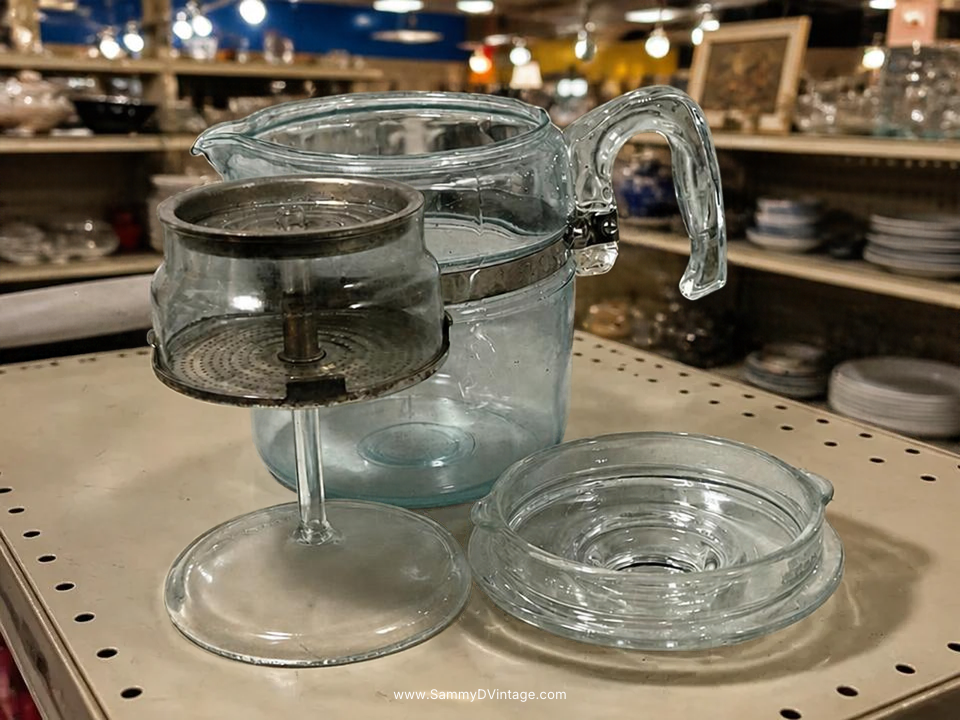
1. The 1950s Pyrex Flameware Percolator (Model 7756-B)
First thing I grabbed was this heavy, thick glass coffee pot. It has that very subtle blue-green tint typical of mid-century glass and a thick stainless steel band wrapped around the neck.
Back in the 1950s, before automatic drip machines took over, Corning Glass made these out of borosilicate glass—the same stuff laboratory beaker glass is made from. You could put this pot directly onto an open gas flame without it breaking. People loved them because you could literally watch the boiling water shoot up the clear center stem and percolate through the coffee grounds inside the basket.
What to check before buying:
If you ever find Pyrex Flameware, do not buy it without inspecting the glass stem and the internal basket. Run your fingernail along the inside rim. If it’s just mineral buildup from old coffee, a 5-minute soak in Bar Keepers Friend Cleanser usually lifts it right off without scratching the glass. Check the bottom for the circular “Pyrex Flameware” stamp. Clear stamps mean it’s an earlier production run. A lot of times, the metal or glass inserts are missing, which cuts the resale value in half.
-
Market value: Complete set in good condition goes for around $70–$90 on eBay. (If you’re flipped-focused, check out my breakdown on how to price vintage items for resale before taking the gamble).
-
Condition check: Run your fingernail along the inside rim. Hairline cracks in Pyrex expand as soon as you add hot water, making them useless for brewing.
2. An Early Hand-Blown Chemex
Tucked behind a heavy blender was an older Chemex pitcher—the classic hourglass glass shape wrapped with a wooden neck collar and a leather tie.
Chemex was designed in 1941 by a chemist named Peter Schlumbohm, who wanted a laboratory-grade pour-over system for home use. The design was so clean that the Museum of Modern Art added it to their permanent collection. Older hand-blown versions are easy to tell apart from the modern factory ones: the glass is noticeably heavier, slightly uneven around the spout, and sometimes has tiny air bubbles trapped inside the glass walls.
Note for using vintage Chemexes: don’t use standard grocery store coffee filters. They’re too thin and will tear. Grab the official Chemex Bonded Square Filters so you don’t end up with coffee grounds in your cup.
What to check before buying:
Look at the wooden collar. The original vintage ones are often cracked or stained with decades of spilled coffee. If the wood is dry, you can oil it, but deep structural cracks hurt the display value. Also check the bottom for a faint green stamp—earlier Michigan or New York production stamps drive up collector value significantly.
-
Market value: Standard modern ones sell used for $20, but authentic early hand-blown models regularly bring $150+.
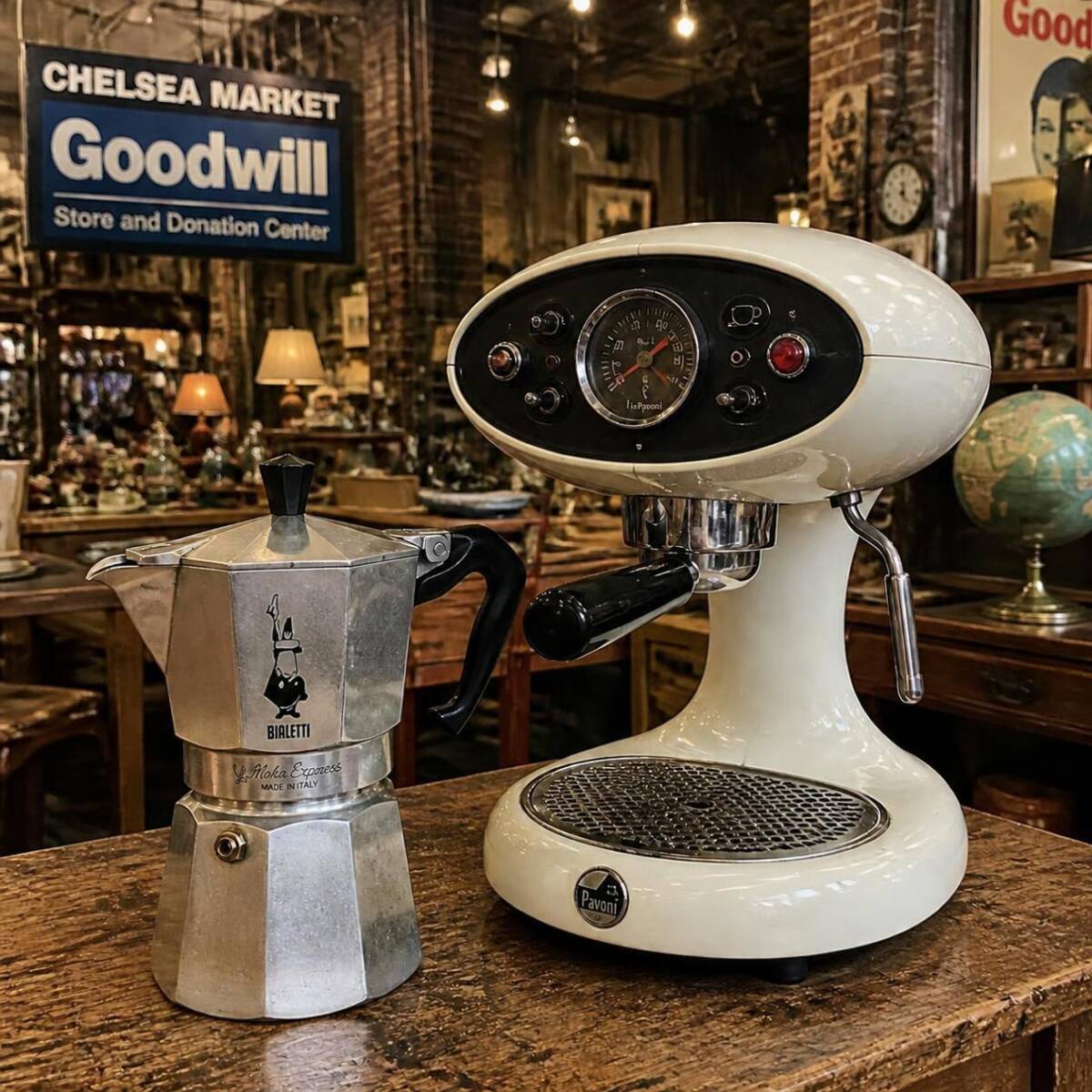
3. A 1970s Aluminum Italian Moka Pot & An “Atomic” Machine
Next to the glass stuff was a heavy, eight-sided aluminum stovetop espresso maker (the classic Bialetti design) and right beside it, a weirdly shaped, shiny chrome-plated pot that looked like a 1950s sci-fi prop.
That second one was an “Atomic” coffee maker, originally designed in Italy during the post-war design boom. They used steam pressure to force water through fine coffee grounds, mimicking commercial espresso machines on a kitchen stove.
What to check before buying:
Unscrew the top from the base and look at the internal threads. Old aluminum coffee gear often develops white calcium crusts or heavy pitting from sitting wet in storage. If the metal inside is rusted through or severely pitted, skip it—it’s unsafe to drink out of, and replacement parts for niche vintage machines are almost impossible to find.
-
Market value: A working vintage Atomic machine can easily fetch $250 to $400 depending on the polish and completeness.
What I Left Behind vs. What Came Home
I left the Moka pot because I already have one on my stove, but I couldn’t pass up the rest.
The Chemex had a faint green stamp on the bottom, and the Pyrex percolator still had every single glass insert inside, totally free of cloudy water etching. Total cost for both at the register? $18.50!
The Chemex is staying on my counter, but the Pyrex is going online this weekend to fund my next trip hunting down the best hidden thrift store gems in New York.
If you love the MCM look but don’t feel like hunting through Goodwill racks, you can still grab the modern Classic 8-Cup Chemex or a brand-new Bialetti Moka Pot directly on Amazon
Have you ever come across a full collection like this at a local store? Let me know in the comments what your best home-goods find has been lately.