
Image by Berna from Pexels
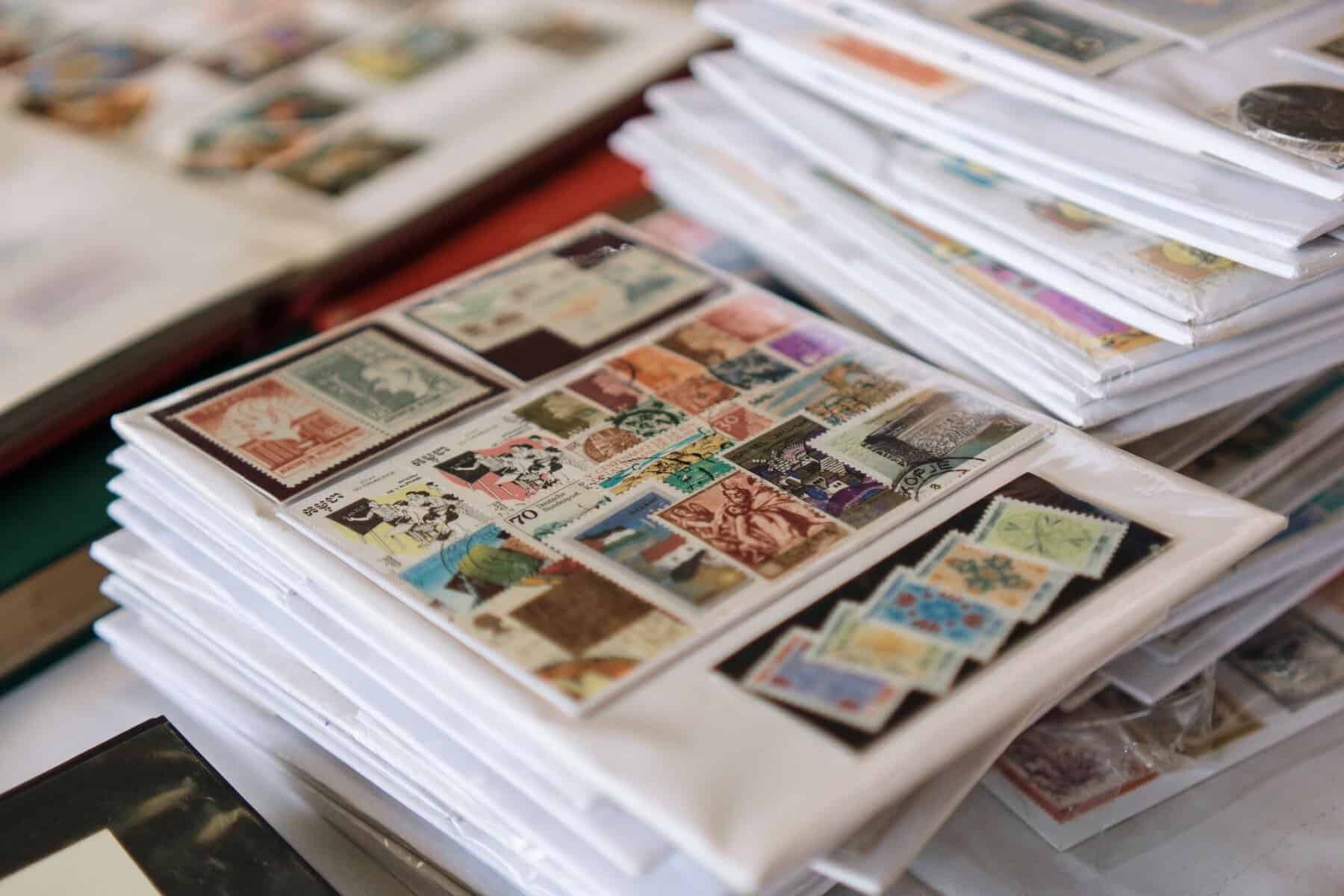
Alt text: A collection of vintage postage stamps neatly organized in albums.
The pin button bin sits in a small tray or divided box one foot from the jewelry case and remains the most consistently bypassed spot in the thrift store. Shoppers reach past it for brooches, scarves, and enamel pins without recognizing that a well-chosen vintage pin button carries more specific subcultural and historical information than almost any other small accessory available at the same price point.
Collectors who do recognize that have access to one of the most historically precise and financially accessible categories in vintage fashion.
Many vintage shoppers treat these bins as decoration overflow rather than historical evidence. A carefully assembled assortment of vintage pin buttons that can be incorporated into your fashion, functions as a strong subcultural signal. These small items come with traceable provenance attached to specific bands, political campaigns, and community organizations.
Table of Contents
1. Target Specific Historical Subcultures
2. Shop Consistently For Realistic Prices
3. Group Unusual Accessories By Context
4. Learn To Authenticate Interesting Materials
5. Engage The Active Collecting Community
6. Fill Gaps With Custom Designs
The Path Forward
1. Target Specific Historical Subcultures
A vintage scarf signals a general era and aesthetic context. A pin button encodes a specific documented event, a named organization, or a precisely located community. A Sex Pistols item from the 1977 UK tour or a Mondale/Ferraro campaign release from the 1984 presidential election serves as a primary source object. Institutional archives demonstrate this value, as the HKS Collection features over 7,500 buttons representing US political history from the late 1800s through today.
The Clash and the Ramones both produced documented button merchandise by 1977, placing those accessories at a specific intersection of geography and local scene. University archives showcase this historical density, as the Northwestern Button Collection includes examples from the 1920s through the 2010s, with a massive concentration from the 1970s and 1980s.
The three largest groupings within that archive touch on election campaigns, anti-war protests, and labor issues. This proves exactly how much organizational identity fits onto a two-inch diameter surface.
Always prioritize items that identify a named band, a campaign, or a documented event over generic slogans. A single button with clear provenance worn on a jacket lapel carries significant visual weight. Ten vague decorative graphics clustered together will only dilute that impact.
2. Shop Consistently For Realistic Prices
Pin buttons appear with reliable frequency at thrift stores, flea markets, and estate sales. Thrift store bins typically price unsorted finds between a few cents and five dollars per item. Flea market dealer tables run slightly higher for named band releases or political campaigns with clear identification. A single vintage brooch of comparable quality often costs more than an entire session of button hunting.
Estate sales operate as the strongest source for civic materials from the mid-century through the 1980s. Record fairs deliver band merchandise at reasonable prices because the customer base remains narrower than the market for vinyl. When local thrifting leaves you without a specific subcultural reference, creating custom-designed pin buttons from Swagprint.com provides an immediate way to fill those visual gaps.
Asking staff directly will surface inventory that other shoppers walk past entirely. Dedicated display space is rare, so many stores keep their stock hidden in backroom jars or mixed heavily with fabric patches. You have to develop the habit of checking the unsorted containers and requesting access to unlisted bins.
| Pro Tip: Ask thrift store staff where pin buttons are kept; they’re often stored in jars or with patches. Consistent checking turns up finds priced from $0.25 to $5, making this one of the most affordable accessory categories. |
|---|
3. Group Unusual Accessories By Context
Very few small vintage accessories attach safely to as many surfaces as a standard pin mechanism. These items fasten instantly to denim jackets, canvas tote bags, backpacks, and shirt collars without altering the underlying garment. Vintage jewelry remains occasion-specific and strictly limited to the neckline, wrist, or ear. A button moves easily between a jacket worn for a music event and a daily work bag.
Most pieces measure between one and two inches in diameter, allowing them to add visual interest without dominating the entire outfit. They function as supporting characters rather than lead accessories. This physical restraint allows a single piece to work effectively on a heavy winter coat lapel one day and a lightweight canvas strap the next.
Group three to five thematically coherent buttons for a jacket, or use a single political piece as a standalone bag accent. Forty mixed items on a single garment will look like a theatrical costume rather than an intentional style choice.
4. Learn To Authenticate Interesting Materials
Authentication requires checking three specific physical signals that you can read just by handling the object. Design style comes first, with psychedelic lettering and saturated colors placing a piece firmly in the late 1960s.
High-contrast photography and stark sans-serif type point directly to the late 1970s through the early 1980s. Digital gradient printing and flawless photographic realism indicate post-1990s manufacture and serve as common markers for modern reproductions.
Printing technique acts as the second major indicator for accurate dating. Lithographed tin featuring direct ink on a metal surface represents pre-1970s and mid-century manufacturing methods.
Mylar over a photographic image creates a slightly reflective dome, dominating the production format from the 1970s forward. Modern digital prints under Mylar produce flatter colors and sharper edges over lighter-weight backings.
The backing mechanism remains the third and most reliable authentication signal. A separate wire ring crimped around the back shell typically indicates pre-1920s through mid-century construction.
A crimped pin-back featuring a single integrated stamped piece became the dominant standard after World War II. Older safety-pin styles feature heavier gauge wire and visible hand-soldering that clearly distinguishes them from recent factory production.
Make a habit of flipping the item over before reading the front text. Weight, backing mechanism, and surface finish carry far more diagnostic information than the printed image alone. Political and band releases face the highest reproduction rates, making tactile checks vital for serious collectors. A flat, cold, lightweight back should prompt you to examine the front design carefully before paying original vintage prices.
5. Engage The Active Collecting Community
Trading and collecting rely heavily on an active, in-person community tradition rather than isolated online forums. Antique flea markets regularly surface general collectors and political memorabilia specialists.
Record fairs attract the band merchandise community because the historical scenes overlap directly with the vinyl tables. Underground music events also introduce handmade pieces from current scenes where trading remains the cultural norm.
Political memorabilia meets serve as the absolute strongest venue for campaign items. Dealers at these specific events know their inventory in incredible detail and can date pieces accurately on the spot. This freely shared expertise accelerates your ability to recognize authentic materials and rare variations. Introducing yourself to these specialists provides a direct route to improving your own tactile authentication skills.
Wearing your current collection to these events functions as both a styling choice and a social signal. Other collectors will notice your specific pieces and respond with trade offers or detailed provenance information. They might even provide a valuable lead on a sourcing venue you have not tried yet.
| Quote: “Wearing your collection to the events where you are likely to find more pieces functions simultaneously as styling and social signal.” Other collectors notice and respond with trades, provenance tips, or source leads. |
|---|
6. Fill Gaps With Custom Designs
Even a collector working estate sales and record fairs consistently will eventually encounter a frustrating historical gap. Some specific subcultural scenes remain entirely under-documented in wearable formats. Originals from certain underground movements exist but surface too rarely at accessible price points. Sometimes a personal reference is so specific that no mass-produced original was ever manufactured.
The range of solutions includes sourcing through specialist dealers or commissioning reproduction pieces through small print vendors. Creating a single custom piece designed around the missing reference solves the problem without requiring bulk minimum orders.
Collectors can choose between traditional pin mechanisms, magnetic backings, or clip-on hardware depending on the intended display surface. Selecting a magnetic back prevents permanent fabric damage when mounting the piece on a favorite hat or thin tote bag.
Modern digital printing handles period-appropriate graphic styles with precision. You can recreate psychedelic lettering conventions, high-contrast screen-print aesthetics, or the flat palettes of 1980s political graphics.
Approach a custom commission by specifying the exact aesthetic era, the color palette, and the appropriate backing type. A well-made custom addition built around a genuine subcultural reference looks natural next to verified vintage finds.
A newer piece works best when it extends a theme already built by your authenticated historical finds. Pairing a reproduction with originals from the same decade completes the visual set rather than substituting for it.
The Path Forward
That small tray sitting beside the jewelry case deserves deliberate, focused attention on every store visit. Pause at the container, pick the pieces up, and flip them over to check the backing mechanism before reading the front graphic.
Value in this category relies entirely on tracking down named bands, documented campaigns, and identifiable community organizations. Thrift and flea market finds deliver this authenticated provenance at highly accessible price points. When those venues fall short, utilizing specialized printing to create a discreet, era-accurate custom piece fills the missing reference without displacing the historical items.
Mixing verified originals with a single carefully designed complement creates a complete visual set. Three to five thematically coherent items chosen for a specific jacket lapel clearly broadcast the subcultural history you want to highlight.
| Author Profile: Swagprint.com is the leading online supplier of custom promotional products for businesses and organizations nationwide. |
|---|